
Engineering / closure selection
Compare magnetic fastener constructions.
Use the opening task and installation process to build a shortlist. A useful comparison keeps the same material stack, handling task and approval criteria.
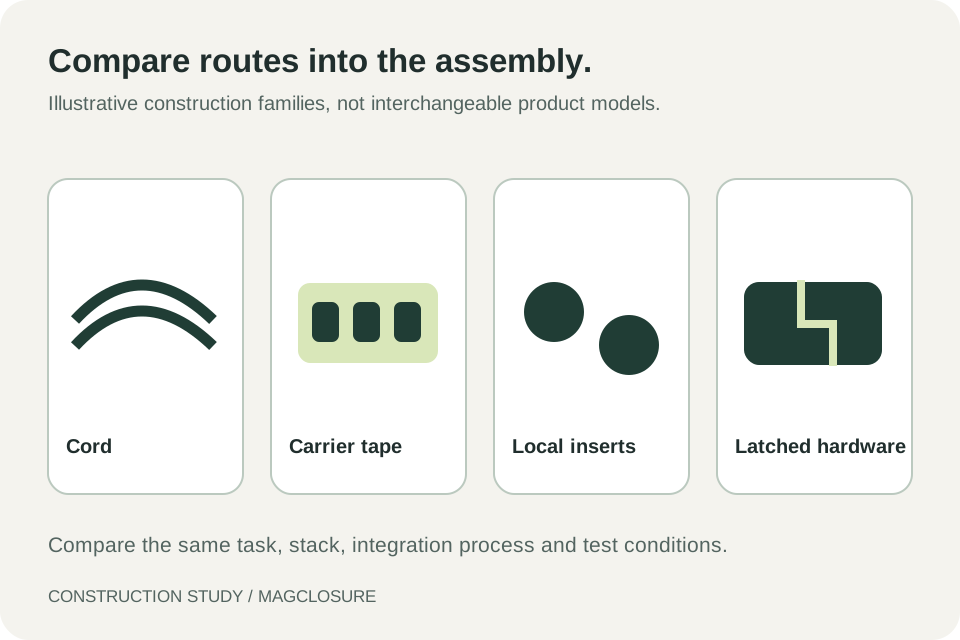
Construction comparison. Individual mechanisms require their own fit and performance review.
View construction diagram ↗The engineering decision
A hidden continuous placket, a removable bag flap and a mechanically latched strap solve different tasks. Start with those tasks before comparing price, magnetic strength or supplier names.
Magnetic cord formats
Start with the cord construction.
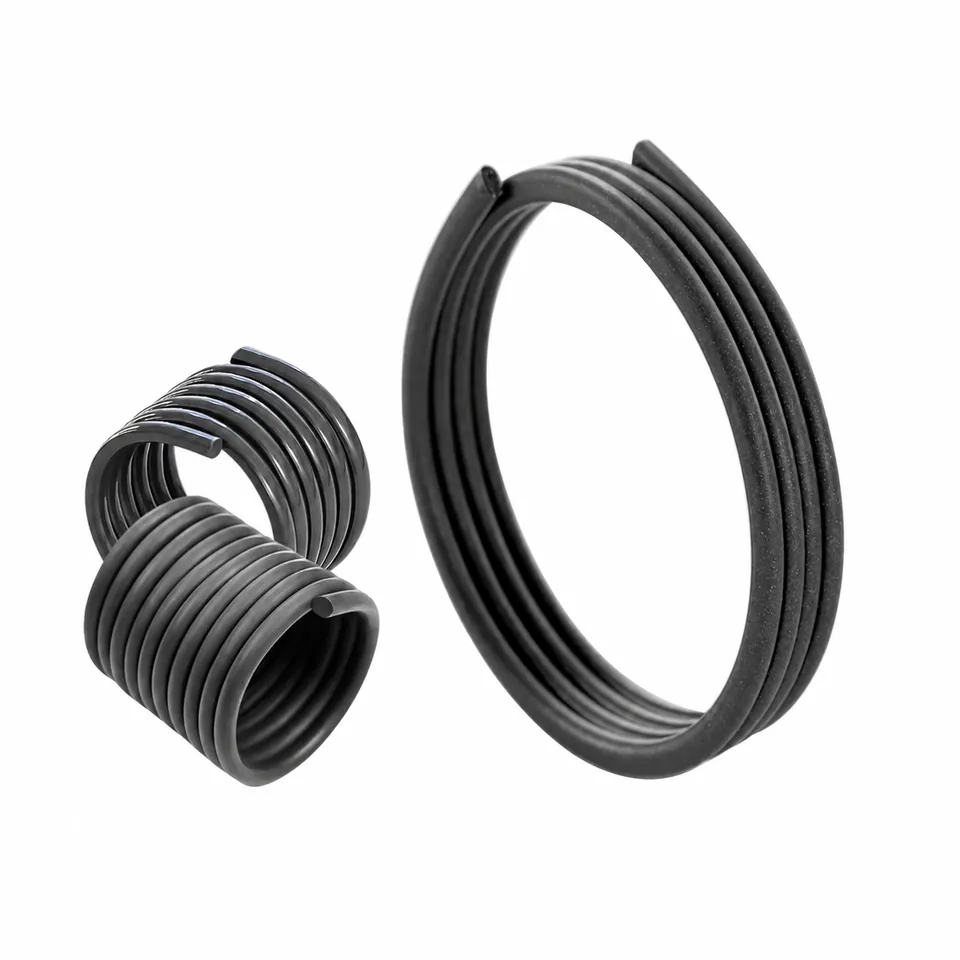
Round and flattened magnetic closure profiles. Compare the cross-section and integration interface explicitly.
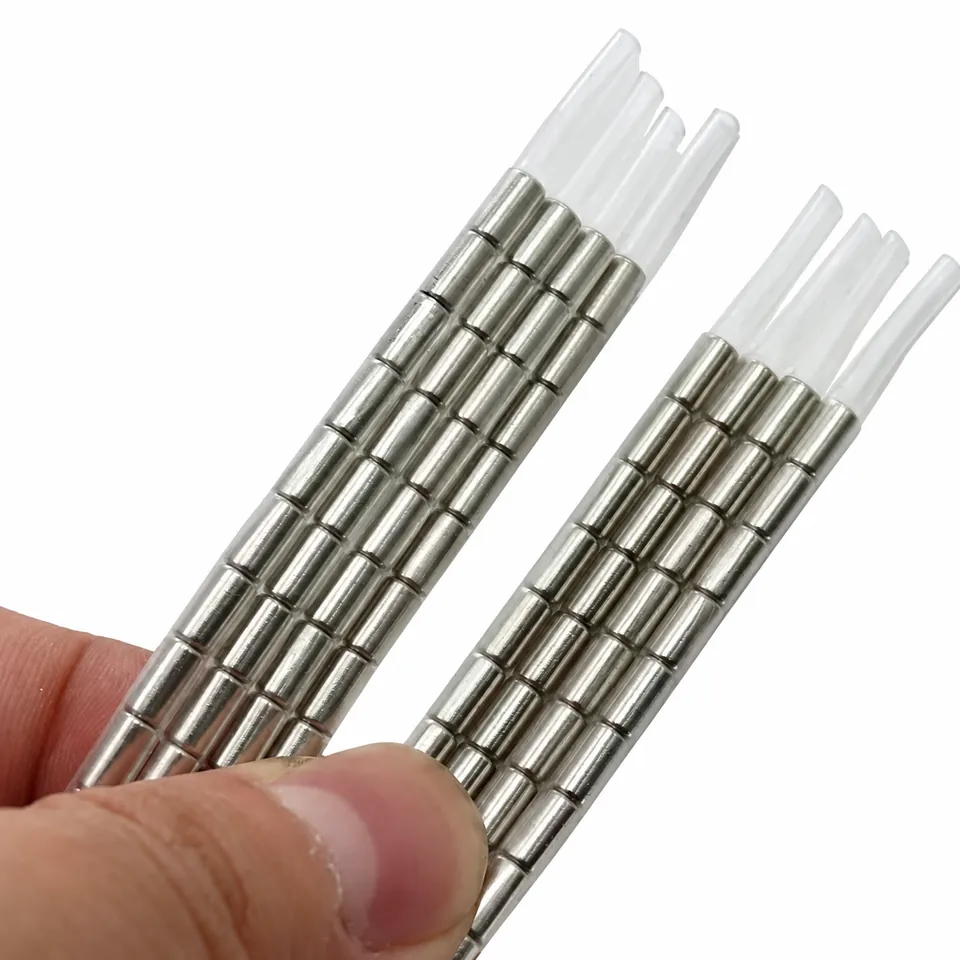
Segmented, sleeved magnetic cord. Its enclosure and end-retention details form a separate construction choice.
Construction options
A shortlist by construction.
Continuous textile integration
Flexible cord and encapsulated tape suit different channel and seam layouts. Compare drape, spacing, cut rules and the complete care requirements.
Local attachment points
Discrete sew-in or mounted pieces provide local positioning. Review the number of installation operations and local fabric or leather reinforcement.
A mechanical retention task
A magnetic-mechanical latch uses a product-specific mechanism and release motion. Assess its own rating, mounting and rights rather than assuming interchangeability.
Prepare the sample brief
Keep these dimensions consistent across quotations.
| Define | Project input | For the sample review |
|---|---|---|
| User task | Reach, grip and release motion | Evaluate the same task and intended users. |
| Construction | Layer stack and mounting | Include both mating sides and all reinforcements. |
| Integration effort | Operations, fixtures and checks | Use an observed sewing or assembly trial for time comparisons. |
| Performance | Force direction and conditioning | Compare reports with equivalent methods and assemblies. |
| Commercial scope | Tooling, packaging and qualification | Include the same deliverables and acceptance requirements. |
| Design rights | Final geometry and market | Obtain appropriate rights review; appearance alone is not clearance. |
Selection matrix
Start with the installation route.
Use this construction shortlist to define equivalent prototypes. It does not assign a force, durability or safety rating to an unspecified component.
| Construction | Installation interface | Task to explore | Review before selection |
|---|---|---|---|
| Flexible cord | Prepared fabric tunnel | Continuous textile opening | Channel, paired orientation, ends and care |
| Encapsulated tape | Carrier sewing flange or qualified joining | Defined insert spacing along a placket | Pitch, needle/cut zones, enclosure and care |
| Individual sew-in inserts | Local flange or attachment holes | Selected closure points | Placement, reinforcement and orientation |
| Mounted bag hardware | Prong, rivet or edge attachment | Local bag flap interface | Backing, layer stack, finish and mounting |
| Magnetic-mechanical latch | Product-specific mounting | Guidance plus a mechanical retention task | Mechanism, release direction and documented rating |
| Hook-and-loop / conventional snaps | Product-specific sewn or mounted interface | A baseline for the same opening task | Handling, local stiffness, care and assembly operations |
Integration sequence
Build a comparison your team can approve.
Fix the application
Choose the opening location, material stack and handling task. Identify any requirement that rules out a construction.
Compare installation routes
List the operations, mating-part identification, fixtures and inspection needed at the factory.
Run equivalent sample checks
Use the same conditioning and measurement context. Separate magnetic retention from attachment and mechanical-latch performance.
Align the commercial brief
Compare the total scope, documented conditions, quantities and confirmed lead times rather than unsupported industry averages.
Your next construction
Bring your brief into the sample room.
Share your material stack, installation route and evaluation needs. Sample selection, availability and supply terms are confirmed after review.
Define the evidence
What the sample needs to demonstrate.
Trade-offs, not universal winners
Local stiffness, opening behaviour, installation and care requirements differ. Choose against the product’s actual priorities.
Existing parts
Identify the current part, dimensions and required changes. Do not infer compatibility or authorisation from a supplier or competitor photograph.
Cost and timing
Use project quotations and observed factory operations. No blanket competitor price or lead-time advantage is asserted.
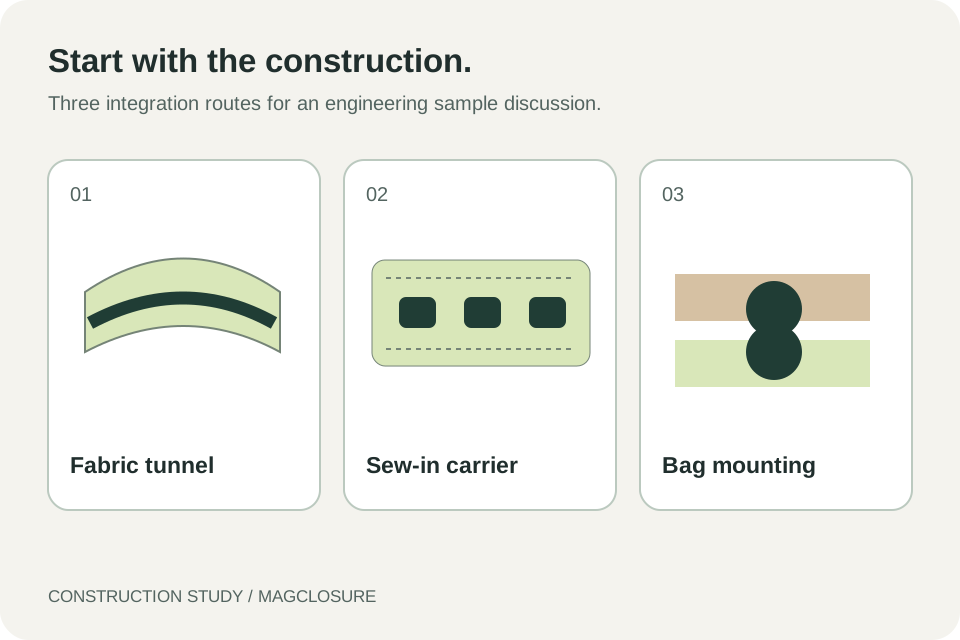
Illustrative integration routes. Final geometry is defined for the project.
View construction diagram ↗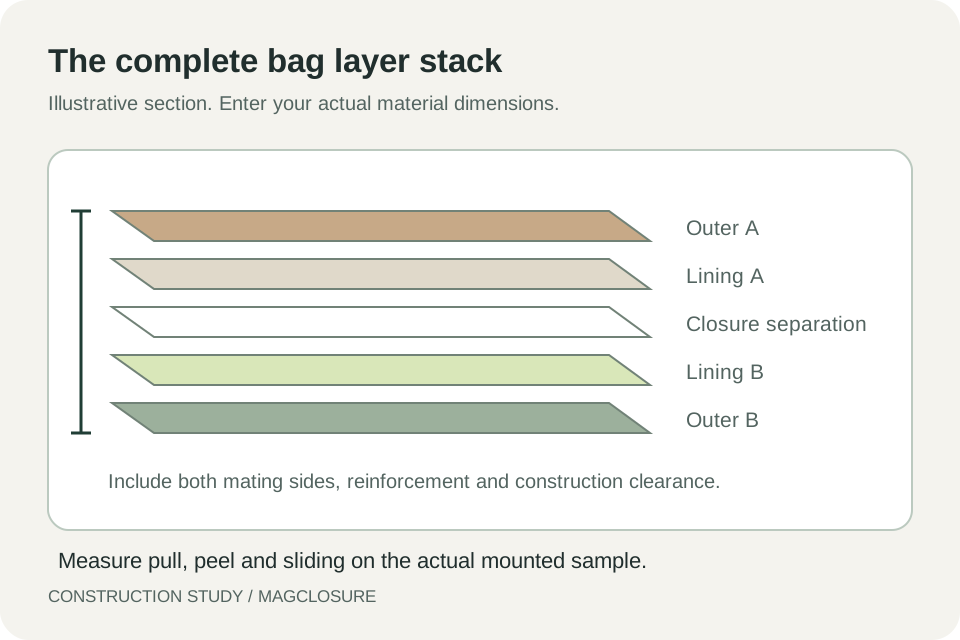
Include both sides of the material stack when preparing a closure brief.
View construction diagram ↗Before you enquire
Questions worth resolving early.
Can I use this to find an alternative to an existing branded fastener?
Yes, as an application brief. Share the current specification and required task. Any proposed design needs its own fit, performance and rights review; this is not a claim of brand affiliation or interchangeability.
Are magnetic closures always quieter than hook-and-loop?
Sound and handling depend on the construction and use. If noise is a selection criterion, define a repeatable finished-product comparison rather than assuming a universal result.
Which construction is best for a hidden garment placket?
Compare the fabric tunnel route with an encapsulated carrier or individual sew-in components. Channel size, seam layout, drape, care and opening behaviour determine the sample shortlist.
Take the brief with you
Working documents for the project.
Use these blank worksheets to keep construction inputs and actual observations in one project record.
Engineering project brief
Application, sample track, delivery scope and construction requirements.
Download PDF ↧Sample evaluation record
Part revision, method, conditioning and blank observation fields.
Download PDF ↧Keep developing the brief
Connected engineering questions.
Your next construction
Bring your brief into the sample room.
Share your material stack, installation route and evaluation needs. Sample selection, availability and supply terms are confirmed after review.