
Closure systems / sew-in magnetic tape
Sew-in magnetic tape. Plan the pitch and sewing path.
Bring spaced magnetic inserts into a carrier your sewing room can position. Specify the enclosure, flange and repeat pattern as one assembly.
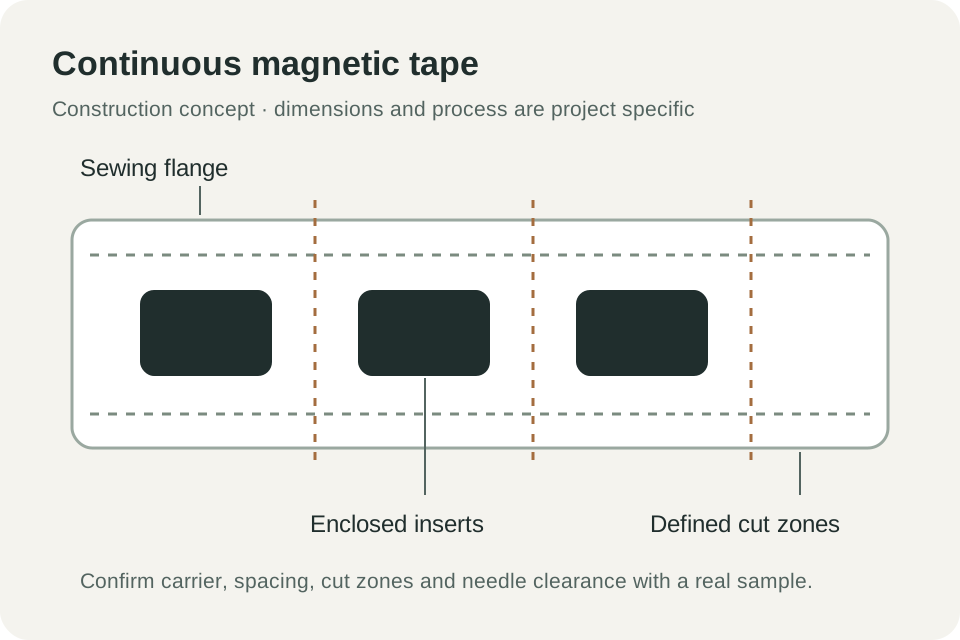
Continuous-strip construction concept for engineering discussion.
View construction diagram ↗The engineering decision
This is a textile closure construction: encapsulated magnetic inserts with a defined sewing path. It is distinct from adhesive magnetic tape, office strip rolls and data-recording tape.
Magnetic cord formats
Start with the cord construction.
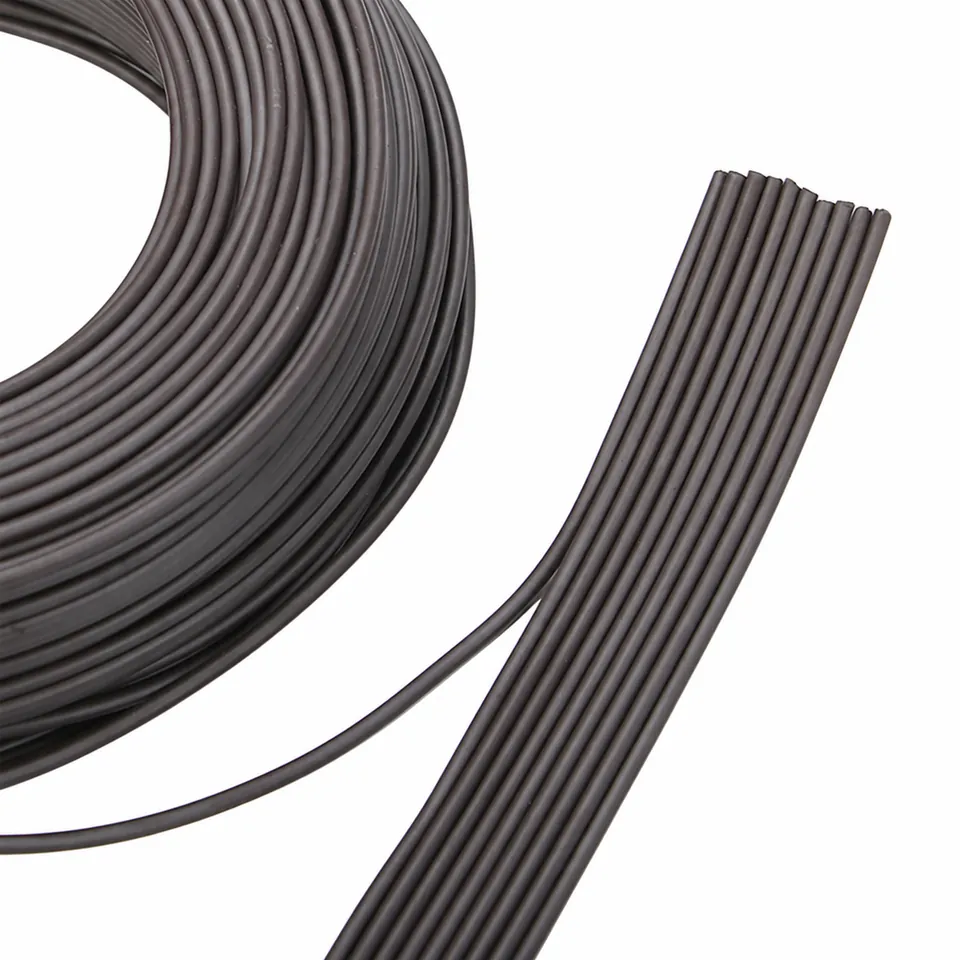
Cord construction for comparison with a sew-in carrier. Define the selected profile and joining interface.
Construction options
Choose the supply format around the pattern.
Individual encapsulated inserts
Position separate components at selected locations. The pattern needs placement references and a repeatable mating-orientation check.
A continuous carrier
Specify insert spacing, carrier width and matching A/B sides. Confirm which sections can be cut and how cut ends are retained.
A prepared placket module
Define a fixed length, number of inserts, end allowance and fabric interface. A module enquiry should include the final joining operation.
Prepare the sample brief
Dimensions the sample room needs.
| Define | Project input | For the sample review |
|---|---|---|
| Repeat pitch | Insert centres and count | Match the garment pattern rather than assuming conventional button spacing. |
| Carrier | Material, width and total thickness | Specify the sewing and care environment. |
| Sewing flange | Clear needle path on each side | Show the seam line relative to the enclosed insert. |
| Cut zones | Permitted cut location and end margin | Keep the enclosure intact; define end retention. |
| Mating parts | Paired orientation and markings | Identify the A/B pair through cutting, sewing and inspection. |
| Joining route | Ultrasonic, thermal or other selected process | Confirm process compatibility and parameters for the actual carrier. |
Integration sequence
Make the sewing operation repeatable.
Transfer the pattern
Mark the closure length, overlap and insert centres on a drawing. Include the finished seam allowance and ends.
Approve the enclosure
Review a cross-section and sample. Keep welds, cut zones and the needle path clearly distinct.
Control paired orientation
Use matching marks and a simple assembly check so the two placket sides remain correctly paired.
Run a timed sewing trial
Record the actual operations, rework and sample quality. Any production-efficiency comparison needs an observed baseline.
Your next construction
Bring your brief into the sample room.
Share your material stack, installation route and evaluation needs. Sample selection, availability and supply terms are confirmed after review.
Define the evidence
What the sample needs to demonstrate.
Enclosure and seams
Assess joining integrity, insert movement and stitch damage before and after the planned care cycle.
Garment inspection
Include the carrier and all inserts in the factory’s complete-product inspection review.
Design ownership
A different-looking construction does not itself establish freedom to operate. Review the final design and relevant rights before manufacture.
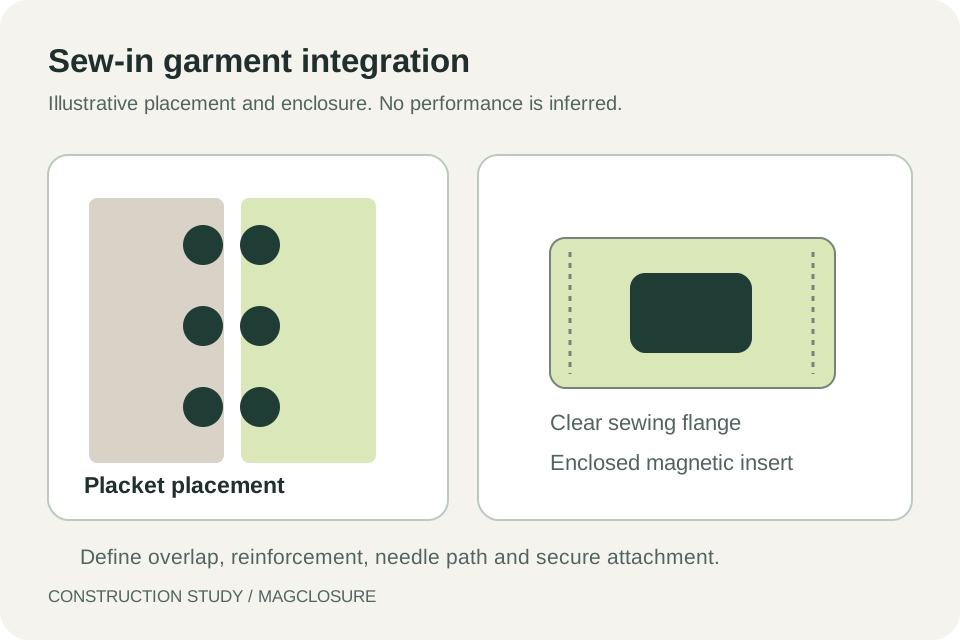
Illustrative placket placement and enclosure. Confirm the needle path on the actual sample.
View construction diagram ↗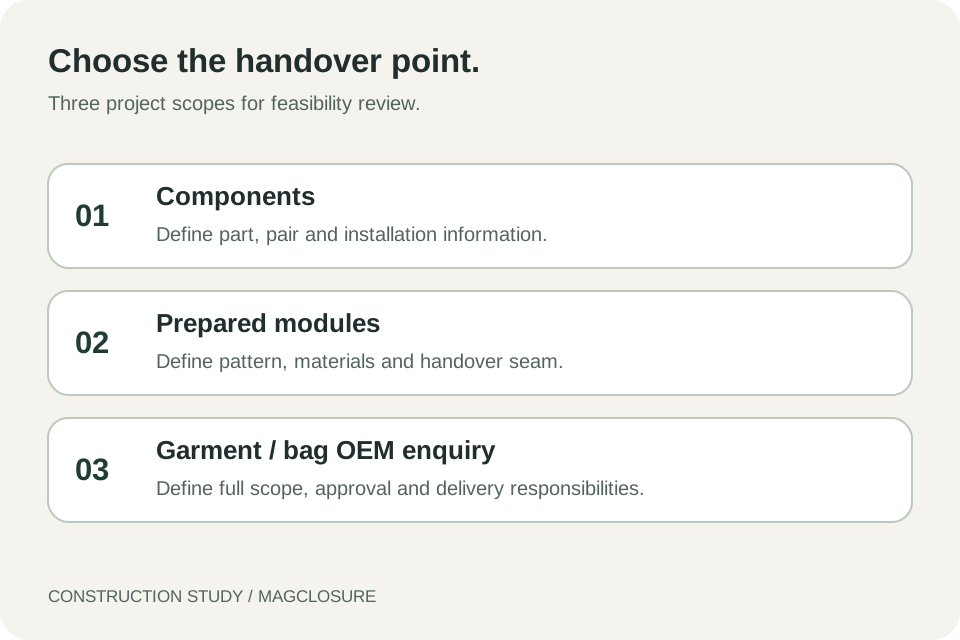
Define the handover point and approval responsibilities before quotation.
View construction diagram ↗Before you enquire
Questions worth resolving early.
What is sew-in magnetic tape?
In this context it is a textile carrier containing spaced magnetic inserts, with a defined attachment path. Common enquiry terms include magnetic snap tape, sewable magnetic strip and magnetic placket tape.
Can it replace a zipper?
Compare the actual task: continuous opening, retention direction, sealing, local access and user handling. A magnetic placket is not automatically equivalent to a mechanically interlocked zipper.
Can it be welded to any fabric?
No universal joining compatibility is assumed. The carrier, coating and garment material determine which process should be qualified.
Does a continuous carrier guarantee faster assembly?
It can change the positioning task, but the result depends on the factory sequence. Agree a timed trial and quality criteria rather than applying an unsupported percentage.
Take the brief with you
Working documents for the project.
Use these blank worksheets to keep construction inputs and actual observations in one project record.
Engineering project brief
Application, sample track, delivery scope and construction requirements.
Download PDF ↧Sample evaluation record
Part revision, method, conditioning and blank observation fields.
Download PDF ↧Keep developing the brief
Connected engineering questions.
Your next construction
Bring your brief into the sample room.
Share your material stack, installation route and evaluation needs. Sample selection, availability and supply terms are confirmed after review.