
Engineering / garment inspection
Magnetic closure detector compatibility, defined.
Start with the factory’s approved inspection process. Evaluate the magnetic closure, garment and detector setup together before assigning any compatibility claim.
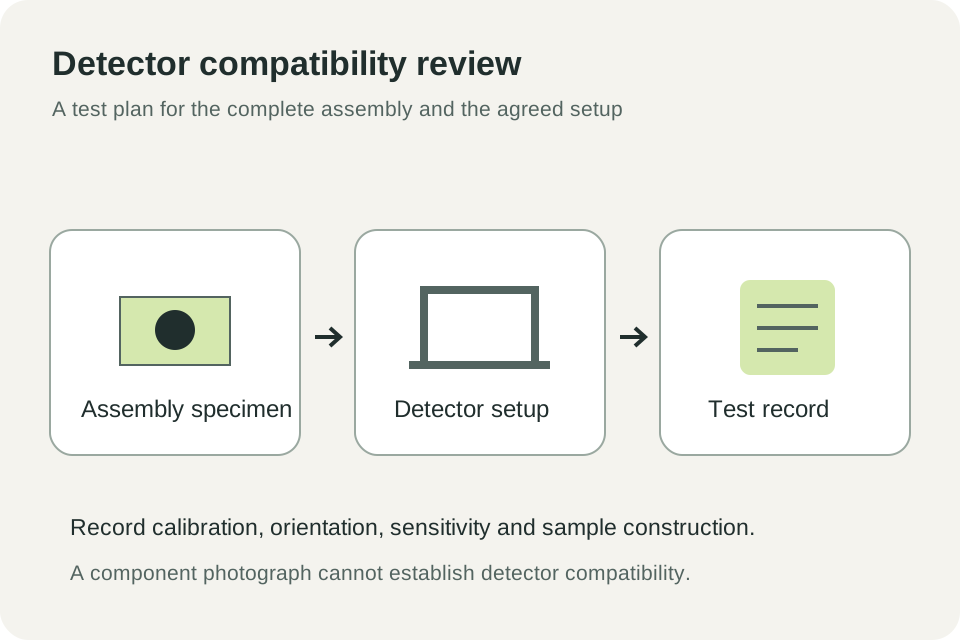
Detector compatibility is evaluated on the complete assembly and the specified inspection setup.
View construction diagram ↗The engineering decision
A magnetic-induction needle detector and a general metal detector perform different inspection tasks. The machine model, test piece, orientation and complete garment determine the evaluation you need.
Magnetic cord formats
Start with the cord construction.
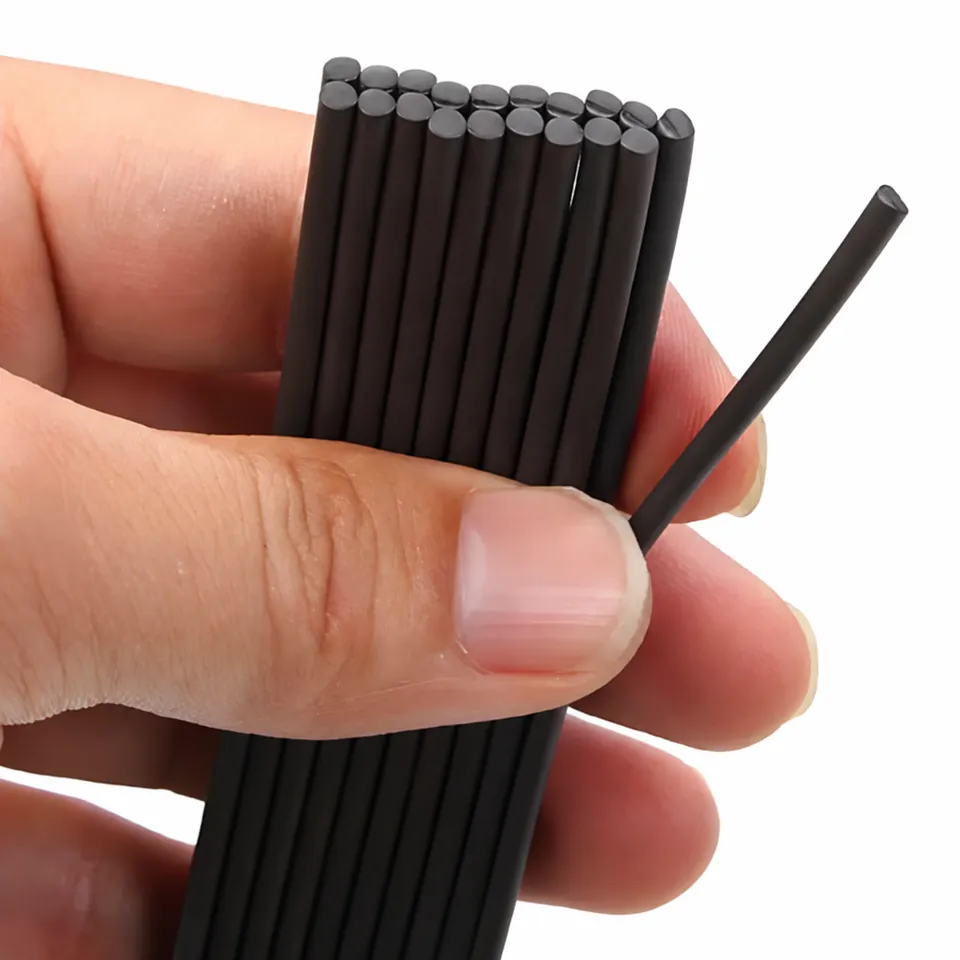
Cord sample geometry. Record the actual part, enclosure and complete assembly for the detector trial.
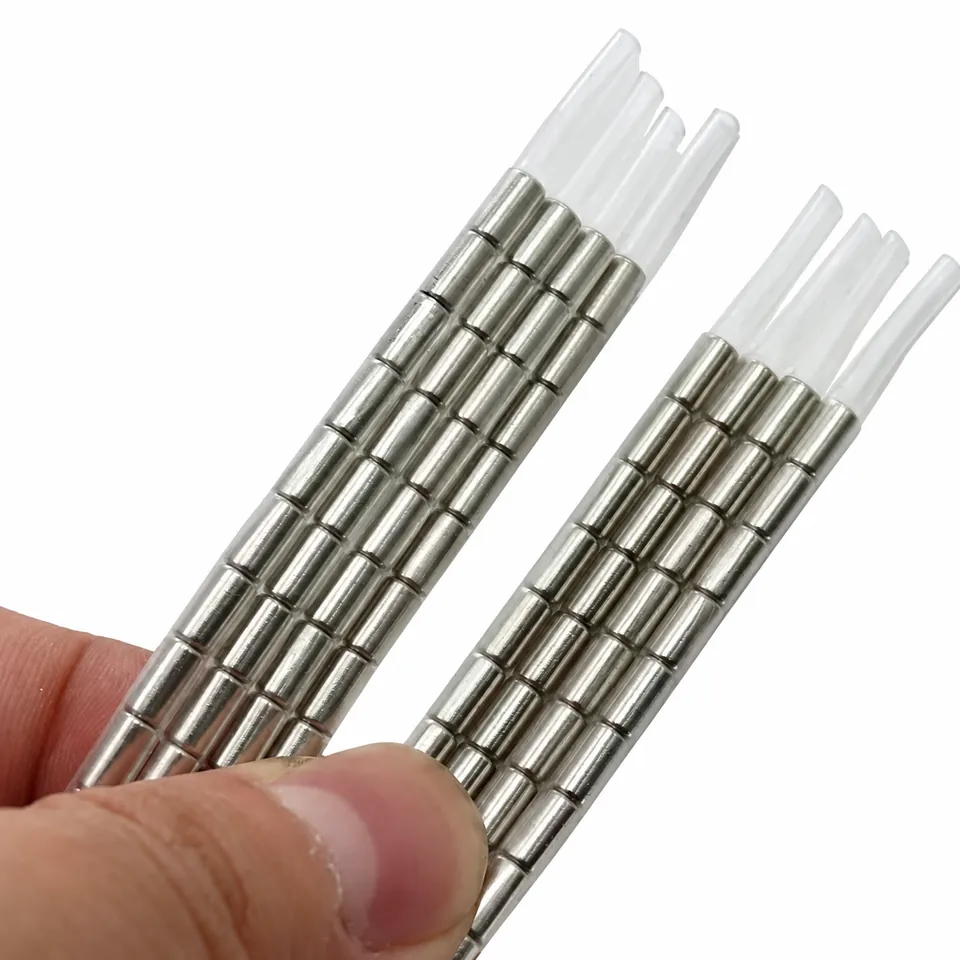
Segmented sleeved cord. Evaluate the identified assembly on the customer’s specified detector setup.
Construction options
Three inputs for a useful QA discussion.
Inspection equipment
Identify the manufacturer, model, detection opening, speed, settings, calibration procedure and reference test pieces.
Complete garment construction
Include magnetic elements, housings, plating, washers, trims and reinforcement. A non-ferrous housing alone does not approve the assembly.
Brand-approved workflow
Document inspection stages and change control. Any proposed post-assembly joining sequence needs written approval from the responsible brand and factory QA teams.
Prepare the sample brief
Bring these details to the compatibility review.
| Define | Project input | For the sample review |
|---|---|---|
| Detector | Manufacturer and exact model | Attach the applicable machine procedure or manual reference. |
| Setup | Opening, speed, settings and calibration | Record the production setup; retain required sensitivity. |
| Reference pieces | Type, size and verification positions | Use the factory’s approved verification procedure. |
| Sample | Complete garment and all trims | Identify closure materials, placement and assembly revision. |
| Process | Inspection and subsequent assembly stages | Include contamination control, reinspection and traceability. |
| Approval | Responsible brand / factory QA owner | Agree acceptance criteria and written disposition. |
Integration sequence
An inspection review sequence.
Capture the approved baseline
Obtain the current machine and brand procedure before changing the closure or manufacturing sequence.
Define the proposed assembly
Map every component and joining step, including any operation after inspection.
Run controlled trials
Use the prescribed test pieces, positions and orientations. Record both the garment response and reference verification.
Obtain written approval
Issue a configuration-specific result and controlled work instruction. Repeat the review when the garment, trim or detector setup changes.
Your next construction
Bring your brief into the sample room.
Share your material stack, installation route and evaluation needs. Sample selection, availability and supply terms are confirmed after review.
Define the evidence
What the sample needs to demonstrate.
Maintain detection requirements
Do not lower sensitivity, bypass a machine or remove a mandatory inspection step to obtain a pass.
Screening is not a certificate
Shielding or a material description does not by itself establish detector compatibility. Approval belongs to the defined finished product and process.
Post-inspection operations
Treat later joining and handling as controlled process changes. A proposed workflow is not permission to skip the brand’s required inspection.
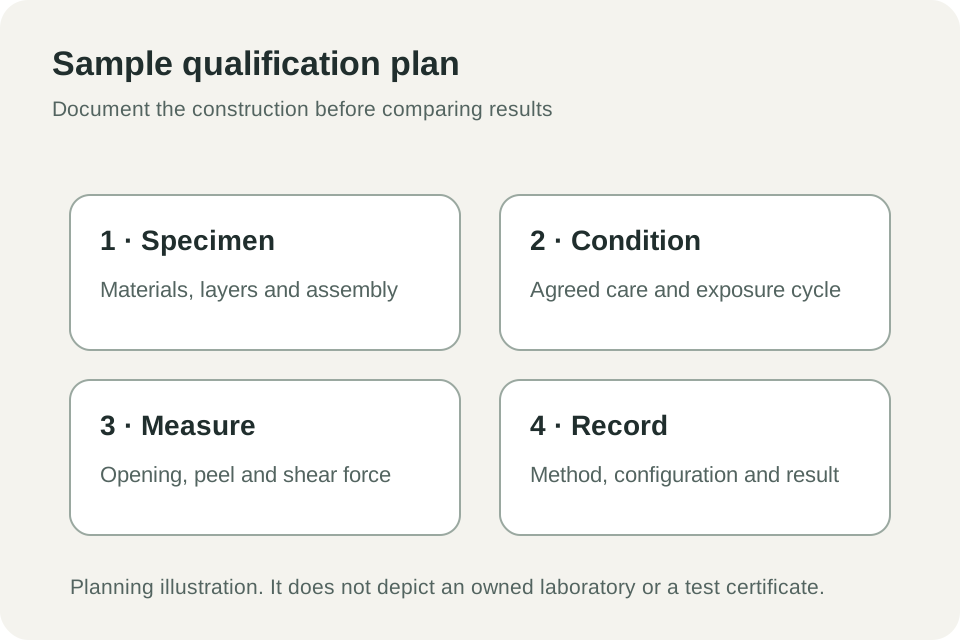
Sample qualification plan; figures and reports are supplied for the actual tested configuration.
View construction diagram ↗Before you enquire
Questions worth resolving early.
Can a magnetic closure pass every needle detector?
No universal compatibility is offered. Evaluate the specific complete garment and detector setup against the brand’s procedure.
Is a non-ferrous housing sufficient?
No. The magnetic elements, other trims, surface treatment and complete arrangement still need assessment on the selected equipment.
Can you supply a universal Hashima-safe SOP?
A work instruction must be approved for the actual factory, machine and garment. Start by sending those details so a project-specific inspection review can be defined.
Can magnets be added after inspection?
Only a process reviewed and approved by the responsible brand and factory QA teams can establish the required control and subsequent verification. This page does not approve that route for your product.
Technical references
Read the source in context.
Equipment-manufacturer guidance on detection principles, setup and clothing accessories; not approval of a MagClosure product.
Take the brief with you
Working documents for the project.
Use these blank worksheets to keep construction inputs and actual observations in one project record.
Garment inspection review
Equipment, reference pieces, process sequence and QA approval inputs.
Download PDF ↧Engineering project brief
Application, sample track, delivery scope and construction requirements.
Download PDF ↧Keep developing the brief
Connected engineering questions.
Your next construction
Bring your brief into the sample room.
Share your material stack, installation route and evaluation needs. Sample selection, availability and supply terms are confirmed after review.